

Knowing whether your pet’s eye issue can be handled by a general practice or needs a specialist changes how quickly you can act, and many eye conditions can be diagnosed and treated at a well-equipped general practice without a referral. The deciding factors are the nature of the condition, the equipment available, and how urgent the situation is. Eye problems in dogs and cats tend to progress quickly, since a corneal ulcer that seems minor on Monday can deepen significantly by Wednesday if treatment is delayed or the underlying cause is not identified. Knowing that a capable team can act promptly rather than spending days on a referral waitlist matters a great deal when your pet is squinting and uncomfortable.
At El Paso Animal Hospital in Derby, our team has the experience and surgical capability to handle a wide range of eye conditions in-house, including corneal ulcer repair and conjunctival flap procedures. With over 150 years of combined experience across our team, we rarely need to send a pet elsewhere for ophthalmic care. Our urgent care services are available for pets with sudden eye changes, and we can often perform necessary procedures the same day. If your pet’s eye is bothering them, call us right away.
Pet Eye Conditions at a Glance
- Many eye conditions need no referral: a well-equipped general practice can diagnose and treat most of them.
- Eye problems progress quickly: a superficial corneal ulcer today can be vision-threatening in 48 hours if treatment is delayed.
- Some conditions do warrant a specialist: severe glaucoma, complex retinal disease, and cataract surgery among them.
- Certain signs are emergencies: a bulging eye, severe squinting, or sudden vision loss should not wait for an appointment.
How Are Pet Eye Problems Evaluated?
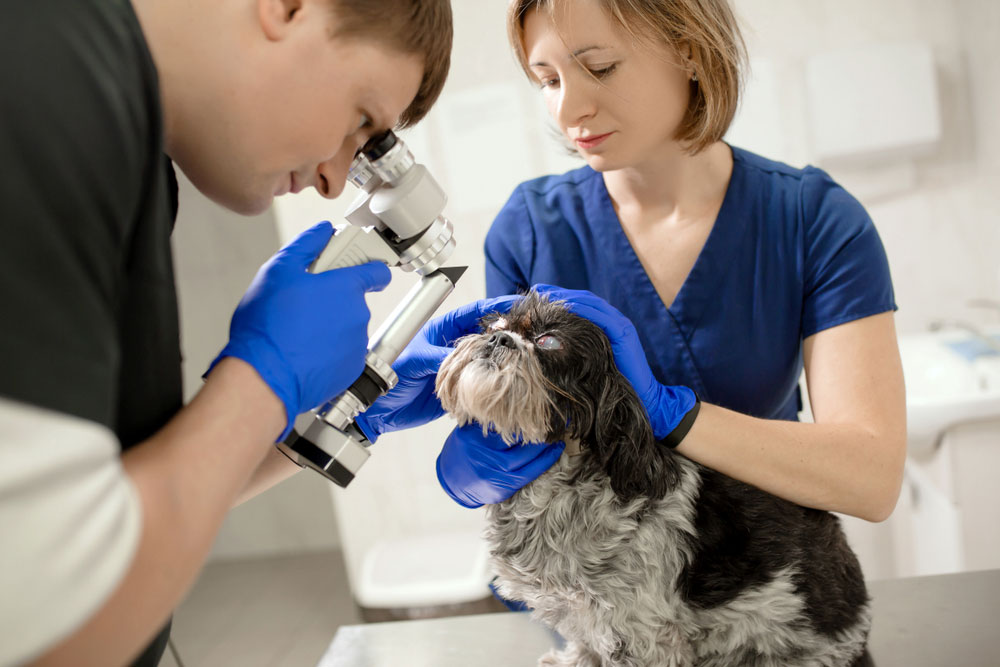
A thorough eye examination is the most important first step in determining treatment, and most of it can be done at a general practice. The key components:
- Visual inspection of the eyelids, conjunctiva, and surrounding tissues
- Fluorescein corneal staining to reveal ulcers, scratches, or other surface defects
- Intraocular pressure measurement to screen for glaucoma
- Pupil response testing to evaluate the optic nerve and retinal function
- Direct and indirect ophthalmoscopy to examine the retina and optic nerve
- Tear production testing with a Schirmer tear test when dry eye is suspected
Specialty equipment available at a boarded ophthalmology referral, like gonioscopy and electroretinography, is used in select cases when changes are not easily visible on the initial exam. Most common conditions can be diagnosed with the basic exam plus staining and pressure measurement. The table below shows where the common conditions are usually handled:
| Condition | Often handled in-house | Usually needs a specialist |
|---|---|---|
| Superficial corneal ulcer | Yes | No |
| Deep ulcer (grid keratotomy, graft) | Yes | No |
| Dry eye, medical management | Yes | Only if surgery is needed |
| Entropion, cherry eye, eyelid surgery | Yes | No |
| Glaucoma, medical management | Yes | Surgical cases |
| Cataract surgery | No | Yes |
| Complex retinal disease, lens removal | No | Yes |
| Bulging or “popped out” eyes | Yes | Only if cases are complex |
How Are Corneal Ulcers Treated?
Corneal ulcers are open sores on the clear front surface of the eye, ranging from minor scratches to deep, vision-threatening wounds. Common causes include:
- Trauma, such as a scratch from a paw or a thorn
- Dry eye allowing the surface to break down
- Eyelid abnormalities causing chronic rubbing
- Foreign material like a grass awn or debris lodged against the cornea
- Infections, less common in healthy eyes and more often a secondary complication
Superficial ulcers typically heal within days to a week with appropriate medical management: topical antibiotic drops, pain control, often atropine to relax the iris muscle, and an Elizabethan collar to prevent rubbing. We handle these without referral. Deep corneal ulcers, non-healing ulcers, or ulcers at risk of perforation often need surgery, with options including grid keratotomy for non-healing superficial ulcers and a conjunctival graft for deeper wounds that need blood supply to repair.
We perform both in-house with the surgical capability and anesthesia monitoring to handle the procedure safely.
What Is Dry Eye and How Is It Managed?
Dry eye, or keratoconjunctivitis sicca, means the eye is not producing enough tears to protect the surface, leaving the cornea inflamed, painful, and vulnerable to ulcers and infection. Dry eye is one of the most common chronic eye conditions in dogs, especially Cocker Spaniels, Bulldogs, and West Highland White Terriers.
Daily medication, including cyclosporine drops to stimulate tear production and lubricating drops to supplement, is the mainstay for most cases, with regular rechecks to fine-tune dosing and catch changes early. Administering eye medications becomes part of the daily routine. For cases that do not respond to medical therapy, surgical options like parotid duct transposition may be considered, and these are specialty procedures referred to a veterinary ophthalmologist.
What Eyelid Abnormalities Need Surgery?
Structural eyelid issues cause chronic rubbing, poor eye protection, or constant irritation that drops alone cannot fix, and they tend to worsen over time in predisposed breeds:
- Entropion: eyelid rolling inward so lashes rub the cornea, with surgical correction the definitive fix.
- Ectropion: eyelid rolling outward, exposing sensitive tissues, with surgical correction as the fix.
- Cherry eye: prolapse of the third eyelid gland, producing a red mass at the inner corner, where surgical repositioning is preferred over removal because the gland produces significant tear volume.
- Eyelash disorders: distichiasis and ectopic cilia, where lashes grow from abnormal locations and rub the cornea, causing chronic ulcers.
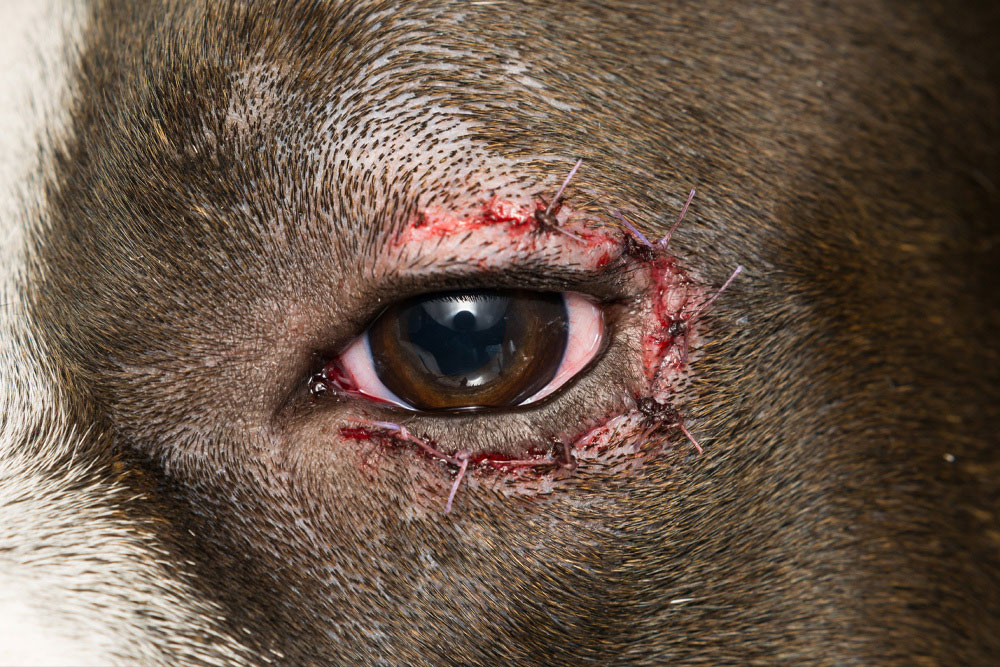
We perform eyelid surgery for these conditions when indicated, with recovery typically involving an Elizabethan collar and follow-up rechecks at 10 to 14 days for suture removal.
How Are Eyelid and Eye Tumors Handled?
Growths on or around the eye are common, especially in older pets, with important species differences:
- In dogs, most eyelid tumors are benign, and removal is straightforward when small but more complicated once the tumor involves significant eyelid tissue.
- In cats, eyelid tumors tend to be more aggressive, since squamous cell carcinoma is common, so early evaluation matters more.
Eye tumors can also develop inside the eye, where small intraocular tumors may be monitored while larger or aggressive ones often require enucleation. Smaller tumors are simpler to remove with better outcomes, which is why early evaluation of any new growth around the eye matters.
What Should You Know About Cataracts?
A cataract is a clouding of the lens that blocks light from reaching the retina, caused by diabetes, genetics, aging, inflammation, or trauma. A few important clarifications:
- No eye drops dissolve cataracts, and products marketed for this purpose do not work.
- Anti-inflammatory drops manage the inflammation cataracts cause inside the eye, and are recommended regardless of the surgical decision.
- Surgery is the only way to restore vision when a cataract significantly impairs sight.
Cataract surgery is a specialty procedure performed by board-certified ophthalmologists, and we coordinate referrals when it is appropriate. Early to mid-stage cataracts generally have better surgical outcomes than advanced ones, which is why timely evaluation matters when cataracts are first noticed.
How Is Glaucoma Treated?
Glaucoma is elevated pressure inside the eye that damages the optic nerve and retina. It is painful, progressive, and can permanently destroy vision quickly if not controlled, with classic signs including a red, painful eye, sometimes with cloudiness or visible enlargement. Treatment depends on the stage:
- Medical management with pressure-lowering drops works for some cases, especially when caught early.
- Surgical intervention may be needed when medical therapy does not control pressure, with earlier surgery focused on vision preservation and later surgery on comfort once vision is lost.
We measure intraocular pressure during routine exams and during the workup of any red or painful eye, and many cases of glaucoma are caught at general practice and managed in collaboration with referral ophthalmologists when advanced surgery is needed.
What Is a Lens Luxation?
Lens luxation occurs when the lens shifts from its normal position, where it can block fluid drainage and trigger sudden, painful glaucoma. Some terrier breeds like Jack Russells and Tibetan Terriers are genetically predisposed, and emergency signs include sudden severe eye pain, redness, and cloudiness. Surgical management of a luxated lens is often a specialty procedure.
How Urgent Is a Retinal Detachment?
Retinal detachment is separation of the light-sensitive tissue lining the back of the eye, causing partial or complete vision loss from hypertension, trauma, infection, or systemic disease. Prompt evaluation is essential, and while not all detachments are surgical candidates, identifying and treating the underlying cause, often hypertension in cats, is always part of the workup. In some cases, identifying and treating the cause rapidly can result in reattachment of the retina; waiting means permanent blindness.
When Is a Bulging Eye an Emergency?
Any change to the size, shape, or position of the eye should be considered an emergency.
- Exophthalmos is forward displacement of the eye within the socket, often from a mass, abscess, or inflammation behind the eye, and it differs from the breed-related prominent eyes seen in flat-faced pets, which are normal anatomy. Treatment depends on the underlying cause and may include imaging to identify what is pushing the eye forward.
- Bupthalmos is a bulging eye- typically due to the pressure of the fluid within the eye increasing to the point that the eye has over-filled. It’s a painful emergency, often due to glaucoma, and needs rapid treatment to prevent blindness.
- Proptosis is the eye actually coming out of the socket beyond the eyelids, and it is an emergency. It is more common in flat-faced pets like Pugs and Pekingese whose shallow sockets make even minor trauma capable of dislodging the eye, and the longer the eye is out of position, the lower the chance of vision recovery. Medial canthoplasty can reshape the inner corner of the eye opening in at-risk pets to reduce future proptosis risk. Treatment typically involves surgically replacing the eye and temporarily sewing the eyelids shut to keep it in place.
We offer emergency veterinary care in Derby during our normal hours of operation, and can often perform emergency surgeries right away.
When Is Eye Removal the Right Decision?
Enucleation, or eye removal, is recommended when an eye is blind and painful, or when a tumor or severe trauma makes saving it unsafe. It is never a first choice, but for pets living with chronic unmanageable pain it is often the most compassionate option. Most pets adjust remarkably well, returning to normal activity within weeks, since dogs and cats compensate for monocular vision quickly and are often visibly more comfortable as soon as the source of chronic pain is removed.
What Factors Shape Treatment Recommendations?
Several factors guide treatment decisions beyond the diagnosis itself:
- Overall health and anesthesia safety, since a complex procedure on a senior pet with heart disease changes the risk-benefit calculation.
- Quality of life and comfort, where the right choice for a blind, painful eye is sometimes enucleation rather than vision-preserving surgery.
- Owner lifestyle and home care capacity, since some conditions require multiple-times-daily medication that is not sustainable for every household.
- Cost and value, where we are transparent about expected costs and reasonable alternatives.
When cost is a factor, we’re happy to chat through the options with you. We offer payment options like Cherry, CareCredit, and ScratchPay to help make the cost of long-term care affordable.
When Should a Pet See an Ophthalmologist?
Most eye conditions can be evaluated and managed at our practice, and we refer to a board-certified veterinary ophthalmologist when:
- Cataract surgery is appropriate and the patient is a good candidate
- Glaucoma requires surgical intervention beyond medical management
- Complex retinal disease needs specialized imaging or procedures
- Intraocular tumors require specialty techniques
- Specialized procedures like lens removal or vitrectomy are needed
For acute emergencies, we typically see the pet first to stabilize, then coordinate referral if specialty intervention is needed, since starting treatment locally before traveling for specialty care often improves outcomes.
Frequently Asked Questions About Pet Eye Conditions
My Dog Is Squinting One Eye. How Urgent Is It?
Same-day urgent. Squinting almost always means pain, and the common causes like a corneal ulcer, foreign body, glaucoma, or eyelid problem all do better with prompt attention. Do not wait to see if it resolves overnight.
Can I Use My Own Eye Drops on My Pet?
Not without veterinary guidance. Human eye drops include products that are dangerous for pets, since some redness-reducing drops can cause significant problems in animals, and many conditions need specific prescription medications that human drops will not address. Call us before applying anything.
My Cat’s Eyes Are Watering. Is That an Emergency?
It depends on the rest of the picture. Mild tearing without other symptoms can be normal or related to dust or mild irritation, while tearing with squinting, redness, swelling, or any change in eye appearance warrants a same-day or next-day visit. Cat upper respiratory infections often involve eye discharge and benefit from prompt treatment.
Will My Dog Need a Specialist for Cataract Surgery?
For cataract surgery specifically, yes. It is a specialty procedure performed by board-certified veterinary ophthalmologists. We can identify cataracts, manage the associated inflammation, and refer when surgery is appropriate, though not all dogs with cataracts are surgical candidates, which the workup determines.
Protecting Your Pet’s Vision
Most eye conditions in pets can be evaluated and treated at a well-equipped general practice without a referral, and the ones that do need a specialist generally benefit from being seen here first for stabilization and workup. Acting early almost always improves outcomes.
If your pet’s eye is bothering them, call us to schedule an evaluation or come in for urgent care, and we will figure out what is needed and how fast.




Leave A Comment